20 Handy Suggestions For Choosing Termite Extermination Services In Jakarta
Wiki Article
Termite Control Strategies for Java Island
The term “island-wide inclusion” sounds like a large-scale infrastructure goal. But for Jakarta’s anti-termite services, it is a forensic science borrowed from biogeography. Every structure in this city is an ecological island surrounded by concrete, compacted soil and utility trenches. The same principles that determined the termites that recolonized Krakatau after 1883 determine whether a Coptotermes colony is able traverse a concrete driveway of five meters to get to a Menteng Villa. Exclusion doesn't mean every termite is poisoned in Jakarta. It's about the limitations of engineering that make crossing difficult.
1. Sterilization is the best way to prevent poisoning every time
Quarantine is the only method which has proven effective in eliminating the entire island. For Jakarta homes, this translates to heating treatment of the infested timber removed during renovation. Wood that has been infested is cut and then disposed of won't harm the colony. This process releases colonies rafts that are released into the stream of waste. Professional exterminators must burn all infested material on-site.
2. Chemical composition of soils is an element in the formation of zones of exclusion
The soils in certain Indonesian Islands are either too alkaline or lack enough nutrients. Jakarta's anti-termite service can reproduce this locally. Utilizing buffered or agricultural sulfur acids pH can be altered beneath slabs along the edges of foundations, creating the perfect substrate for fungus-growing fungus termites will not traverse through. The soil is not required to be toxic. It is just required to be a hostile environment.
3. Connectivity: The Lifeline of the Colony
Subterranean pests aren't an individual; they're a superorganism, spread out over foraging tunnels. Severing landscape connectivity--removing wooden fences that contact soil, replacing organic mulch with river stone, eliminating brush piles and timber debris--fragments the colony into isolated pockets that eventually starve. The island-wide exclusion starts at the property line, not at the wall that forms the foundation.
4. Macrotermitinae Cannot Cross Pavement
To maintain their symbiotic gardens, fungus-growing termites such as Microtermes, Macrotermes, as well as Odontotermes need soil. Coptotermes continue to construct protected tubes across concrete, but fungus farmers aren't able to build satellite nests. A continuous barrier of vapor under the structure is permanently able to block out all feeding guilds.
5. The Port of Tanjung Priok Is Jakarta's Achilles Heel
When infected timber is brought into the quarantine zone then the island's isolation falls apart. Pallets for shipping, decorative crates furniture made of reclaimed wood, and landscaping materials from overseas enter Jakarta every day through Tanjung Priok with Coptotermes gestroi as well as Nasutitermes colonies. Inspections for anti-termite must not be limited to only the structure in use but also the wood that has been brought into the property after treatment.
6. Inclusion Infrastructure: Wood species is Exclusion Infrastructure
Jakarta's local timber supply is dominated by Acaciamangium Falcataria, Heveabrasiliensis, and Acaciamangium. All three species are non-durable but highly attracted to termites. If you have specified that these species should be used to repair structural damage or door frames or window jambs, it's like creating bait stations disguised as architecture. Incorporating prohibited species into renovation contracts is required to be excluded.
7. Foraging highways can't avoid moisture Gradients
Termites do not build mud tubes due to their love of construction but because the cuticles of their scuticle are desiccated at a level below 70% relative humidity. The water gradient that is created by any evaporative surfaces, including dripping hoses, poorly graded plant beds, or leaky condensate pipes for air conditioners can be a potent magnet for. The abstention of audits on moisture from maintenance checks is not a good idea.
8. Above-Ground colonies signal Perimeter Breach
Coptotermes Gestroi reaches the true island colonization by establishes cardboard nests within wall cavities or rooftop spaces. There is no need to connect with the soil any longer; now, the colony is autonomous and can continue to exist for years with no ground access. Pesticides who discover aerial nests should consider the structure as a fully invaded island requiring total enclosure fumigation or whole-structure heat eradication.
9. Baiting Is Surveillance, Not Exclusion
Perimeter traps cannot stop termites from entering. They are able to eliminate colonies within the range of the station. At worst, they function as food sites to allow colonies to survive dry times. Exclusion is a physical barrier that include stainless steel mesh, graded stones, polymer membranes or bonded sand which are constructed or retrofitted by excavation of the perimeter.
10. The 1.6 million House Precedent
Between 1911 and 1942, Dutch colonial officials rebuilt or renovated 1.6 million Javanese homes as part of an unprecedented campaign of exclusion targeting bamboo construction that was plague-ridden. They succeeded in the face of epidemics, but culturally they fell short. Bamboo was banned, traditional housing stock destroyed, and the vernacular knowledge was eliminated. Jakarta anti-termite businesses must realize that erasure occurs when exclusion is imposed without consent. Homeowners who are aware of and adhere to their exclusion strategies will get the most lasting results.
Conclusion
Chemical application schedules are not sufficient to remove termites from a whole island. This is done through manipulation of habitats, material quarantine, and physical barriers, as well as intentional engineering to create an unhospitable soil chemical. Krakatau demonstrated that complete sterilization and a strict quarantine can suppress a volcano at a 100-year scale. Jakarta anti-termite services cannot replicate volcanic eradication but they could implement every other lesson that island biogeography has produced. Termites use floating wood for crossing the water. They traverse pavements on concrete edges. They traverse property lines with organic mulch. Exclusion is the process by which you take away every vessel. Follow the recommended jasa pembasmi rayap for site tips including perusahaan pest control, rayap kayu, pembasmi hama, cara basmi rayap, perusahaan pest control, jasa anti rayap, anti rayap untuk kayu, kayu anti rayap, cara basmi rayap, basmi rayap and more.
Above-Ground Baiting In Jakarta For Asian Subterraneans
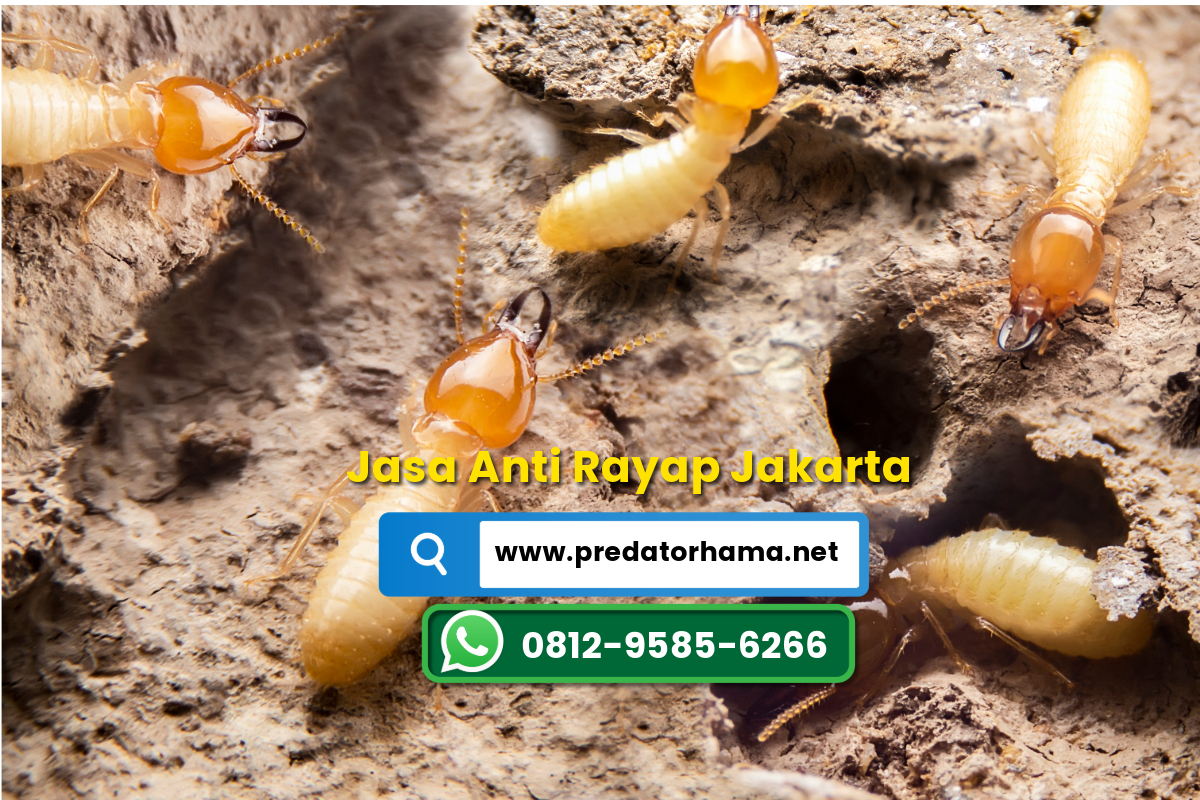
Many Jakarta homeowners believe that termite baiting means plastic stations buried in the garden. They are checked every couple of months by a technician who looks inside, shrugs, and then moves on. This is a method of controlling perimeters, not colony extermination. Baiting aboveground is completely different area of expertise. The bait station isn't submerged and is instead anchored on a mud-tube that is active or is pushed into the excavated damage. The termites aren't required to locate the bait. It is positioned on their highways for commuters. For Asian subterranean species--Coptotermes gestroi, Coptotermes curvignathus, Microtermes insperatus--above-ground delivery bypasses every behavioral barrier that makes perimeter baiting slow and uncertain. Jakarta antitermite companies do not have above ground stations in their vehicles. They do not have equipment with treatment equipment, but they are merely inspection.
1. Above-ground stations need active pest control
Technicians install stations and then wait for termites to find them. Above-ground baiting is based on confirmation. Station is only used after mud tube or damaged timber has been identified. This isn't a restriction but rather an efficiency. In sterile dirt no plastic is ever dug. Technicians are not able to have to spend hours observing stations that are not hit.
2. Mud Tubes are now Delivery Infrastructure
The stations above ground are designed to integrate with existing termite structures. The base of the station is sealed to seal the mudtube's opening. Termites that are traveling from nest to feeding sites are able to pass through the station, come into contact with the bait matrix they eat and continue their journey. The tube remains in place. The commuter patterns aren't disrupted. The colony poisons itself by with its infrastructure.
3. For Above-Ground Deliveries, the Test for Palatability Is Different
The colony is already doing a taste test for wood. Verification of the feeding site. The aboveground bait matrixes can be only acceptable and not be the most attractive. The formulation is flexible and can include toxicants that are slower acting that would otherwise be rejected because they compete with untreated wood surfaces. Jakarta exterminators are able to carry a variety of bait formulations. Choose based on the feeding habits you observe.
4. Recruitment Multiplier via Self-Seeding
The transfer of live termites from infested wood into the station's recruiting chamber triggers an immediate the initiation of feeding. The termites introduced have already adjusted to their local environment and the foraging pattern. They start eating bait and then attracting nestmates via trophallaxis. This action alone increases the speed of delivery of toxicants by 30. Exterminators eliminate biological resources by killing termites by scraping away damaged timber.
5. Coptotermes gestroi Responds Rapidly Above Ground
Asian subterranean termites, especially Coptotermes gestroi, keep a high foraging tempo year-round. Above-ground stations that are installed on active infestations typically show eating in just 48 hours, and an observable consumption of bait within one week. Colony elimination timelines are compressed from weeks to months. Services quoting six-month timelines for above-ground baiting are either using suboptimal matrices or failing to successfully transfer termites.
6. Microtermes and macrotermes require different placement
The termites that cause the fungus (Microtermes Macrotermes, Microtermes and Macrotermes Gilvus) don't build mud tubes as extensively as Coptotermes. Their foraging takes place above ground in a more scattered way, and the feeding areas of these termites are often concealed within wood. These species require the excavation of the damaged zone, direct insertion into the feeder's cavity, and careful sealing. The geometry of the station is different. Jakarta exterminators will see poor results when they try to use Coptotermes protocol for Microtermes infestations.
7. Moisture Conditioning Is Non-Negotiable
Above-ground bait matrixes for the fish are produced in certain levels of water activity. Jakarta's ambient humidity causes water exchange with the surroundings. Bait stored in the toolbox of your vehicle for a couple of weeks is dehydrated when left on the ground, exposed to atmospheric moisture and without its packaging, can be ruined. Exterminators must make sure that bait cartridges are properly conditioned prior to installing them by adding water in the correct amount.
8. Inspection Frequency Compresses
Programs for perimeter baiting run according to inspection cycles that are either biennial or quarterly. Above-ground baiting takes place on a weekly cycle. Because active infestations consume bait quickly the cartridges that are depleted in a matter of days must be changed. The destruction of colonies is confirmed when feeding ceases, and mud tubes begin to dry up. If the service plans to look for baits above ground in their regular perimeter monitoring schedule, they could be unable to observe colony recovery because they will not see any bait remaining and could think that treatment has progressed.
9. Warrantys Require Different Underwriting
Perimeter-baiting warranties are priced in accordance with the density of stations and frequency of inspection. Above-ground warranty prices are based on species identification and infestation extent. One Coptotermes gestroi colony that enters through the threshold of a door is covered at standard rates. Microtermes infestations that spread across a ground floor will require a different approach to risk. Jakarta antitermite companies that charge the same price for both scenarios are misestimating the risk.
10. Above-Ground Is Diagnostic, Not Just Therapeutic
The amount of bait consumed as well as the ratio of casting termites found in stations and the place of mud tube attachment provide an in-depth analysis of colony health and the range of foraging. Consumption is high in colonies that are stressed by resources. Consumption followed by abandonment indicates possible colony elimination or possible bait avoidance. Mud tubes with darker colors suggest less traffic. If trained to recognize the signals, pest control professionals can alter the parameters of treatment in real-time. The termite exterminators who change cartridges and then leave the area are not utilizing this most information-rich method of treatment for termites.
Conclusion
Above-ground apprehension and identification of Asian subterraneans performed by inspection firms is not a secondary service. This is the thing that separates colony removal specialists from inspection companies. Perimeter baiting monitors. Above ground baiting is a treat. Perimeter baiting is waiting for to be discovered. Engineers come across above-ground baiting. Perimeter baiting generates quarterly service requests. Above-ground baiting results in the elimination of colonies and warranty renewals after confirmed the effectiveness. Jakarta antitermite service providers who delay adopting above-ground protocols typically cite the equipment cost and requirements for technicians, or the discomfort of carrying multiple bait matrices. These aren't hurdles. They are simply investments. The cost of equipment is recouped in the first three above-ground deployments. Training investment can pay dividends in retention as technicians progress from generalist technicians to diagnosticians. Multiple bait matrixes differentiate the premium service providers from the commodity exterminators. If a homeowner has an active termite infestation doesn't need to watch the perimeter. The colony has to be eliminated. Above-ground swarming is the most effective method in achieving this aim. Jakarta exterminators are always working on tubes, injecting soil and not deploying above-ground stations. This allows the colony to continue feeding. Follow the top rated anti rayap jakarta for website advice including basmi rayap, rumah rayap, cara membasmi rayap di lemari, rayap lemari, pest control harga, cara membasmi rayap kayu, jasa anti rayap surabaya, rayap kecil, bahan lemari anti rayap, pembasmi rayap and more.
